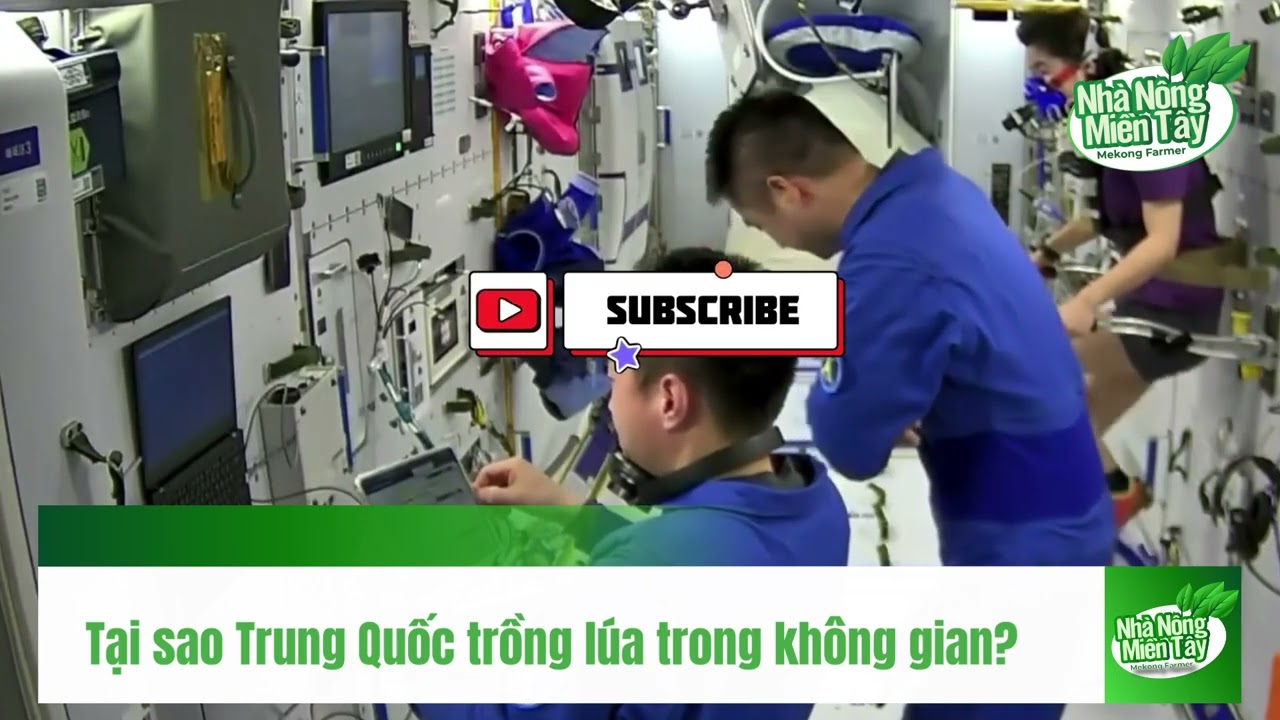

Chinese astronauts have been growing rice aboard the Tiangong space station as part of an experiment designed to observe the crop’s full life cycle in microgravity.
Food production for long missions
Future crews travelling far from Earth cannot rely entirely on stored food. Growing crops in space could support a more sustainable food supply while adding fresh ingredients to astronauts’ diets.
Studying plants in microgravity
Researcher Zheng Huiqiong said the rice shoots had reached about 30 centimetres. Scientists are studying how microgravity affects flowering at the molecular level and whether that environment can be used to influence plant development.
The Wentian laboratory experiment
The work is being conducted in the Wentian laboratory module, which joined the Tianhe core module of the Tiangong station. If the plants complete their life cycle, seeds can be returned to Earth for further study.
Why the research matters
Space agriculture could become essential for long-duration missions. The findings may also deepen scientists’ understanding of plant biology, although results obtained in orbit require careful testing before broader conclusions are drawn.